


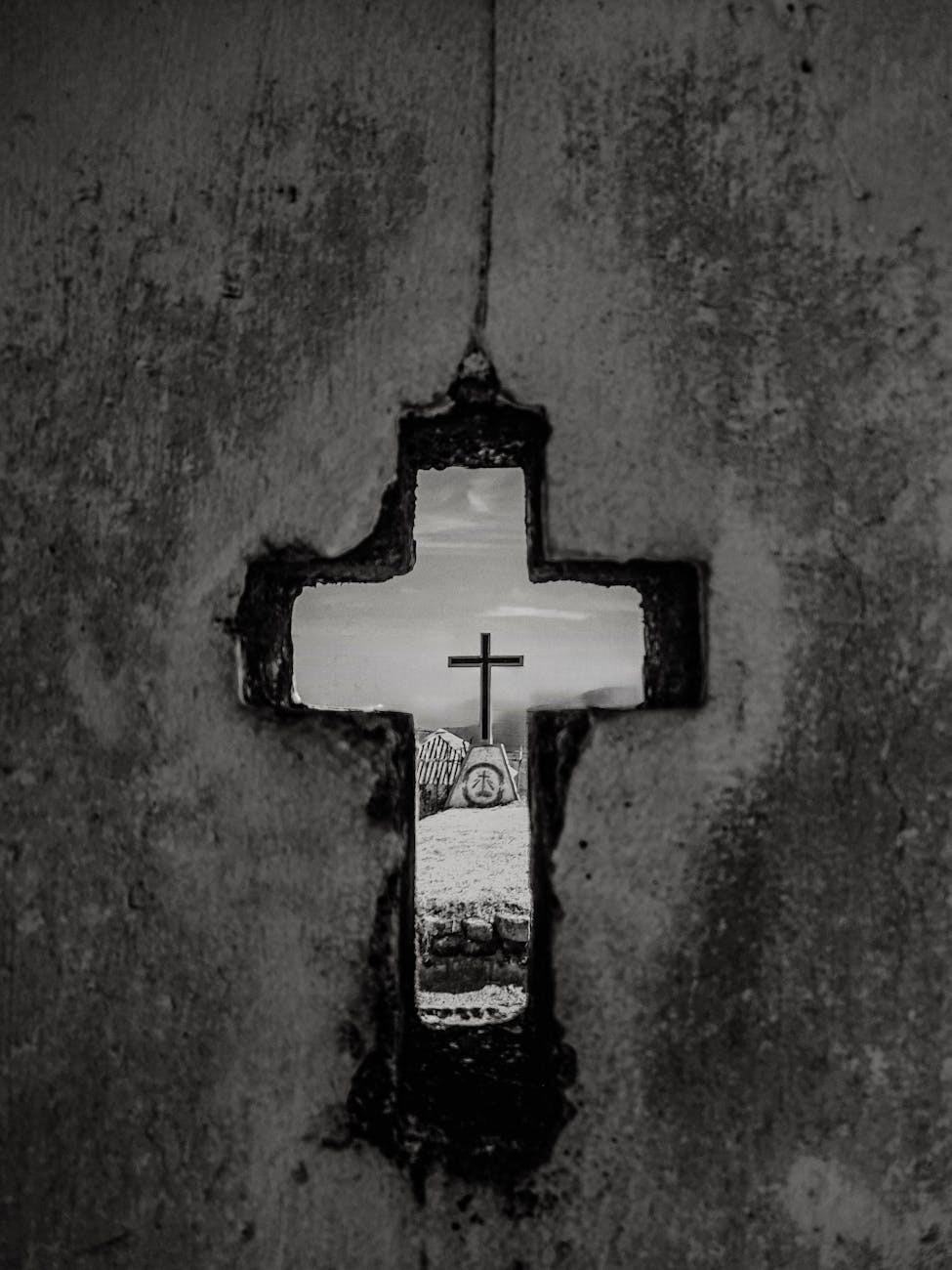
As the day offers each of us the opportunity to once again reminisce of the sobering truth of an innocent man being condemned to die as a sinner (Luke 23:22). With each of our past, present and future sins, proclaiming death to Christ. Much like the Jews who gathered there at his trial shouting: “Crucify Him, crucify Him” (Luke 23:21). Yet I fear that the rosy, fair weather Gospel presentation of today has made us mere spectators of the cross. There were two kinds of groups at Jesus’s crucifixion – the jeerers and the followers. The Jews, Pharisees, Sadducees, the rulers and Roman soldiers (sans the centurion) were all of the former group. Then the disciples, the woman who ministered to Jesus, Simon of Cyrene and other acquaintances of Jesus who belonged to the latter group –fully ready to follow Jesus even unto His death. And today I believe there is a third group in the fold, sadly a product of the contemporary Gospel. One which would be made sorrowful of the cross, shed a few tears looking at Christ’s sufferings, find repentance in their hearts and yet come back the very next day to rinse and repeat this cycle. Maybe they have truly believed that is all there is to the Gospel – finding forgiveness through the cross.
But isn’t the message the angel proclaimed to Joseph go more like this: She will bear a Son; and you shall call His name Jesus, for He will save His people from their sins (Matthew 1:21). And Jesus Himself attesting to His divine purpose in Luke 19:10: For the Son of Man has come to seek and to save that which was lost. But is this all just semantics? On the contrary, look at Paul’s life –Christian persecutor turned to persecuted (Galatians 1:13). To him the cross wasn’t merely the means of erasing his shameful and sinful past. If so he would not have called himself chief of all sinners (1 Timothy 1:15) or even brought up his past prior to him coming to Christ (1 Corinthians 15:9, Galatians 1:14). Rather, Paul chose to glory in his transformation by grace (1 Corinthians 15:10). He himself and undoubtedly the Jews around him were witnesses to his miraculous transformation. And so today, as we remember this sadistic instrument of Roman torture, the bloodied and marred Christ hanging on it, and the words of the penitent thief in his sense of trivial justice uttering: And we indeed are suffering justly, for we are receiving what we deserve for our deeds; but this man has done nothing wrong. Let us be moved that we deserve such love (Romans 5:8), let us be moved by the sufferings of the One whom we love dearly. But let our love run deeper than this. Let it confess: “I’m sorry Lord, that I am the reason you’re up on that cross condemned while I stand here innocent.” Let our love go even deeper than this and let it plead: ”Oh, that you would save me from my wretched state that caused all this. Rid thee of the carnal man in me.” And God’s answer to such a prayer would look something like this. He would first lead us to Gethsemane –the place of the complete brokenness of a man’s will. He would then lead us via dolorosa (the road of sufferings) –the journey of faith that demands complete trust and surrender. And then it would culminate in our cross –where we are crucified with Christ. Then we become partakers of His Glory (2 Corinthians 4:17). The message of the cross is One man dying for our sins (1 Peter 3:18). The invitation of the cross is for us to partake of it as His disciples (Luke 14:27) and to be crucified with Him.
He died for us, so that we die to ourselves.
He died for our sins, so that we die to our sinful nature.
I have been crucified with Christ; and it is no longer I who live, but Christ lives in me; and the life which I now live in the flesh I live by faith in the Son of God, who loved me and gave Himself up for me. – Galatians 2:20


Leave a Reply