


As the disciples would all leave for Capernaum from the deserted place. Having just become first-hand witnesses to one of Jesus’ greatest miracles – the feeding of the 5000 men, besides women and children (Matthew 14:21). It was evening now (Matthew 14:23). And the new Jewish day would begin at sunset. For Jesus this would mean alone time with the Father. The theme of Jesus praying before and after significant events through the Gospels must be a familiar theme to the attentive reader. With the crowd dispersed and the disciples well on their way, Jesus would spend about 9 hours in prayer atop a mountain (Matthew 14:25). Talk about imitating Christ in this!
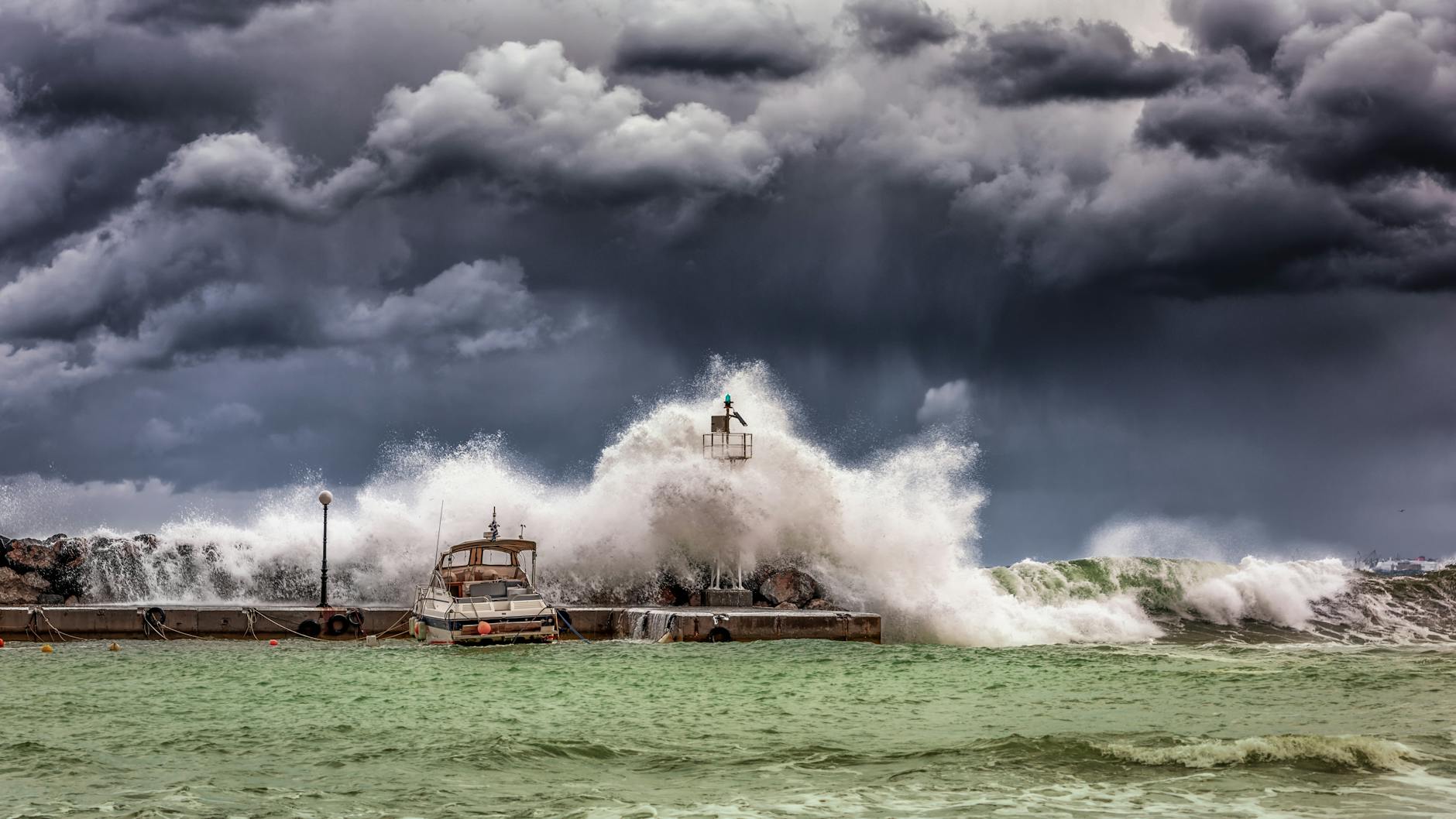
The boat was now well off-shore. At a approximate distance of more than 6 kilometers (John 6:19). This pace though was unusually slow and would have been extremely challenging for the disciples. With a handful among them being very adept fishermen. This distance under favorable winds and weather would have been covered in under an hour’s time. Peter, James and John had travailed an entire night for a catch before (Luke 5:4-10). But this was entirely different from that. They weren’t anymore despairing for fish but their very lives. If you have done 30 mins of oaring on a small two-seater boat in still waters. You may better relate to the physical struggle and exhaustion that the disciples would have been enduring through at this point in a much larger vessel and against terrible waves (Matthew 14:24).
Twelve physically depleted and mentally tiring men in the midst of strong winds and threatening waves. So their collective terrified response to the sight of a man walking on the water in the midst of this is by no means unnatural (Matthew 14:26). Their baffled exclamation: “It is a ghost!,” is maybe the most rational reaction you could expect (and maybe the Bible critic and atheist would be in agreement to this point). What old testament prophet had ever before walked on water? What man could so blatantly defy the immutable laws of nature that God had set? Wouldn’t this therefore by logic be defying God Himself?
A familiar voice would be heard above the sound of the howling winds, the crashing waves and the own bewilderment of the disciples’ thoughts. “Take courage, it is I; do not be afraid.” (Matthew 14:27). Like the young lamb which recognizes the shepherd’s voice, but still is not entirely sure of it (Mark 6:52). Peter would call out to confirm his wavering faith: “Lord, if it is You, command me to come to You on the water.” (Matthew 14:28). Jesus would speak just a word: “Come.” (v29). But just one word is all it would take for the natural laws of surface tension to immediately cease where Peter would place his foot on and for faith to supersede the law. With each step he would take he would become a walking miracle.
Maybe the more Peter treaded farther from the boat – his former, shaky refuge in the midst of troubled seas. The more he thought like the Israelites in the wilderness, who did not think ahead but were still caught up in Egypt. Or instead he thought the farther from the boat he was – the more strenuous his swim back would have been, that is if he could still manage it. And maybe the more he got caught up in his thoughts. The more his eyes began to lose focus of Jesus. Like an out-of-focus camera that blurries the actual person of focus and sharpens instead the background or foreground. And the less he focused on the author and perfecter of his faith (Hebrews 12:2). The faster his faith also began to wilt. Fear soon occupied faith’s emptied place in Peter’s heart. His feet underneath him unsure. Like his sinking faith, Peter also began to sink. In a moment of desperation, he cried out: “Lord, save me!” (Matthew 14:30) A cry that has not once gone unnoticed and unheeded in millennium’s past, present and future. With an outstretched hand Jesus would swoop the sinking disciple out of the sea into the boat (Matthew 14:31). But He would still pose the question: “You of little faith, why did you doubt?”
What is the lesson here? Is it of the contrast between the disciple’s vain efforts in the flesh to the power received in prayer? Is it of Jesus showing up when and where we least expect Him? Is it of fear blinding us to see Jesus in the midst of troubled seas? Is it of taking that step of faith off the boat into the storm and to walk towards Jesus? All of these indeed can be profound lessons that this story reveals and speaks to us. Yet, this is for those who find themselves where Peter did. Barely staying afloat in your walk of faith. The point of no return to the boat and the point where maybe you have also lost sight of Jesus. Where you have prayed every prayer. And tried everything you possibly could. Where every promise still is a promise and has not yet become your Amen. Like Peter, and countless others before and after him. The desperate cry to an ever-faithful God: “Lord, save me!” is maybe the only prayer left to pray. And God with an outstretched arm is ready to swoop you out from your sinking place.
The story did not end there. It’s ending as recorded by Matthew 14:32 and John 6:21 reads: When they got into the boat, the wind stopped…and immediately the boat was at the land to which they were going. The centerpiece of this story is often made about the faith of a man. When instead it was about the faithfulness of God’s Son (Matthew 14:33).
Peter sank in his own faith. Jesus saved him.
The storm threatened the disciples’ boat. Jesus stopped the storm.
The disciples for all their efforts through the night could not make land. Jesus in a moment immediately took them all to land.
If we are faithless, He remains faithful, for He cannot deny Himself. – 2 Timothy 2:13


Leave a Reply